Guide to the Czech Communities in Texas

compiled by Cindy Harvey Neal

Nearly 100 settlements in Texas have had Czech names, and about half of them still exist. Some of these settlements are especially important because of the early date they were established or because they were the site of an historic church, school, lodge hall, printing press, or other building or institution. Listed here are the ones I have found so far.  I have also included some areas which are not predominantly Czech, but have celebrations of our Czech heritage.  Historical Markers are quoted in RED.

Austin - Cat Spring  Frydek   Industry  Nelsonville  New Bremen  New Ulm  Sealy   Wallis  Wesley |
Bastrop - Kovar  Rosanky
Bell - Cyclone  Holland   Marekville  Ocker   Olmos  Ratibor   Red Ranger  Seaton   Sevcikville  Temple  Vilas   Zabcikville
Bexar - San Antonio
Bosque - Kopperl
Brazoria - Danbury 
Brazos - Bryan  Kosarek   Shiloh  Smetana   Tabor
Burleson - Berry Creek  Caldwell  Cooks Point  Frenstat  Merle  Sebesta   Snook 
Caldwell - Prairie Lea
Calhoun - Six Mile
Colorado - Columbus  Nada  Pisek   Shimek  Weimar
Concho - Eola
Ellis - Ennis
Erath
Falls - Lamar  St. Paul  Zipperlandville
Fayette - Ammannsville  Bridge Valley  Cistern   Dubina  Ellinger   Engle  Fayetteville   Flatonia  High Hill   Holman   Hostyn  La Grange  Plum  Praha   Ross Prairie  Roznov   Schulenburg   St. John's  Warrenton  Zapalac
Fisher - Longworth
Fort Bend - Beasley  Rosenberg
Frio - Schattel
Galveston - Galveston
Gonzales
Harris - Houston
Houston - Lovelady
Hill - Penelope
Hockley - Pep
Jackson - Ganado
Karnes - Hobson
Lavaca - Bila Hora  Breslau  Hallettsville   Kinkler  Koerth   Komensky  Midway   Mont  Moravia   Moulton  Novohrad   Shiner  Velehrad   Vienna   Vsetin  Wied   Witting  Worthing  Yoakum
Lee - Dime Box  Hranice
Live Oak - Mikeska
McLennan - Elk  West
Milam -  Marak
Nueces - Corpus Christi  Kostoryz
Palo Pinto
Refugio - Bonnie View
Runnels - Rowena
Tarrant - Ft. Worth
Tom Green - Bohemia  Carlsbad
Travis - Austin
Trinity - Bohemian
Victoria - Holub  Inez   Shillerville  Victoria
Waller - Holik  Slovanville   Waller
Washington - Brenham  Latium
Wharton - East Bernard  El Campo  Hillje   Nottawa  Taiton   Wharton
Williamson - Behrenville  Beyersville  Friendship  Georgetown.  Granger  Taylor


Abbott, Hill Co.

Location:  Abbott is a half mile east of Interstate Highway 35 and ten miles south of Hillsboro in south central Hill County.

History:  It was founded as a railroad town on the Missouri, Kansas and Texas line in 1881 and named for Jo Abbott. An Abbott post office was established in 1882 and served the town until 1928.  In the 1890s cotton was a major crop in the area around Abbott. Abbott suffered disastrous fires in 1897, 1903, and 1904 and was rebuilt after each. Czech farmers came and bought much of the rich black farmland of the area. The first Czechs had come as early as 1870 and have maintained a Catholic parish in the town. The population of Abbott was 156 in 1890 and grew to a high point of 713 by 1914. It had declined to 264 by 1941. In 1989 the town had 364 residents. Country music star Willie Nelson is from Abbott. In 1990 the population was 314.

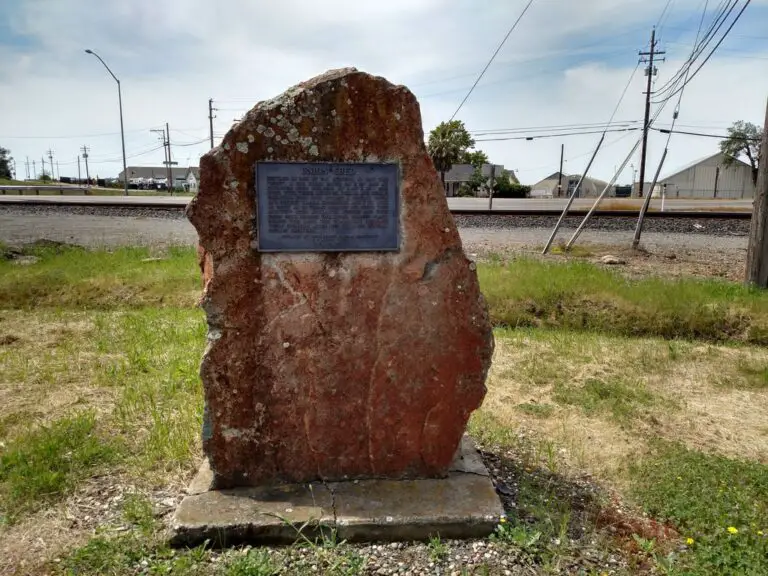
Historical Marker
Czech Settlers in Hill County (I35 Access Road in front of Turkey Shop Cafeteria)
One of the most influential and numerous national groups to settle in Hill County, Czechs came to this area from Fayette County and the province of Moravia in Austria-Hungary. Many sought greater freedom due to barriers to attaining national status in the old country, political restraints, introduction of German into the schools, and compulsory military service. Land agents painted a rosy picture of opportunities awaiting those who purchased cheap state university lands in this region. The first immigrants arrived in the 1870s and found the soil so fertile that they induced many others to join them. Building of the Texas Central and "Katy" railroads boosted immigration. "Capital" of Czech settlement in the area is Abbott, named for Jo Abbott (1840-1908), judge, legislator, and lawyer. Surrounding towns are Zee Vee (so called for the local ZV cattle brand), Penelope, and Aquilla. Neighbors admired the Czechs for their neat, well managed farms and their thrift and industry. For many years they retained a strong group spirit, speaking their own language and observing old world customs. In recent decades they have mixed more with other groups and today fill many public and professional offices as well as continue to farm.

Links
Handbook of Texas Online- ABBOTT, TX
Fatima Catholic Cemetery ~ Abbott, Hill County, Texas
Abbott Cemetery - Hill County, Texas


Ammannsville, Fayette Co.

Location:  Ammansville, on Farm Road 1383 nine miles southeast of La Grange in southeastern Fayette County.

History:  It was settled during the 1870s by German and Czech immigrant farmers on lands originally allotted to the Fayette County schools. The first settler in the community was Andrew Ammann, who arrived on March 12, 1870. He was a noted architect as well as a farmer. Other early family names included Kossa, Sobolik, Heller, Stefek, Fietsam, Munke, Bartos, Holster, Lidiak, Ohnheiser, and Zoesper. In 1876 the first business opened, and by 1879 the town had a post office and a public school. A Catholic church and school opened in 1890 with Father Jules Vrana as priest. The church was destroyed by a storm in 1909 and rebuilt and dedicated on November 24, 1910. Shortly thereafter it was destroyed by fire and again rebuilt. The post office was discontinued in 1906; mail was delivered from Weimar until the 1920s and subsequently from Schulenburg. The public school closed in 1909. In 1914, the population of the extended community was estimated at 800, with 100 living in town. In the 1980s fewer than fifty people lived in Ammansville. The Catholic church, surrounded by a few remnant businesses, remained the focal point of community life. In 1990 the population was forty-two. Today the only existing business is Tofel’s Place on the east side of town. It is rustic, with drinks, dominos, snacks, gas, and local conversation. There is a KJT Hall where the annual church picnic is held every June on Father’s Day. The cemetery next to the church contains many Czech inscriptions.

Festival
Ammannsville Parish Picnic - Father's Day (June)

St. John the Baptist Catholic Church
Father Jules Vrana established the original church which was destroyed in 1909, then rebuilt and again destroyed by fire. The rebuilt present church is adorned with lovely statues, many of which were saved from the disastrous fire in 1918.
7745 Mensik Rd.
Schulenburg, Texas 78956-5724
Date Built: 1918
Date Painted:1919
Architect: John Bujnoch
Artist: Fred Donecker and Sons
Builder:
Mass Times: Weekends: Saturday 5 p.m. (Odd Months). Sunday
9:30 a.m. (even months). Weekdays: Friday 5 p.m.

Historical Marker
St. John the Baptist Catholic Church
Ammansville
FM 1383
1983-NR

St. John The Baptist Catholic Cemetery
St. John the Baptist Catholic Cemetery

Links
Handbook of Texas Online- AMMANSVILLE, TX
Picture Tour


Austin, Travis Co.

Location:  Austin, the capital of Texas, county seat of Travis County, and home of the University of Texas at Austin, is located in central Travis County on the Colorado River and Interstate Highway 35. Situated at 30°16' north latitude and 97°45' west longitude, it is at the eastern edge of the Hill Country and the Edwards Plateau.

History:  The city was established by the three-year-old Republic of Texas in 1839 to serve as its permanent capital, and named in honor of the founder of Anglo-American Texas, Stephen F. Austin

Texans of Czech Ancestry (TOCA)
4120 Firstview Drive
Austin, Texas 78731
president: Woody Smith

Faith Community Church (Unity of Brethren)
Address: 1800 Peyton Gin Road, Austin, TX; Phone: (512) 836-2712
Location: North off of State Hwy 183 between North Lamar and Burnet Road

Links
Handbook of Texas Online- AUSTIN, TX


Beasley, Ft. Bend Co

St. Wenceslaus Catholic Cemetery

Historical Marker
Beasley (on Loop 540 at 4th St., Beasley)
Founded 1894 by Cecil A. Beasley (1862 - 1908), on the Texas & New Orleans Railroad. First called "Dyer" for Isabel dyer (1871 - 1933), whom Beasley later married. Post office opened as "Beasley," May 13, 1898. The town boomed in 1910, as Stern & Stern Land Co. of Kansas City promoted land sales through a town lot auction. Many new settlers were German and Czech families from Washington County. Soon Beasley had 3 general stores, 2 cotton gins, a 3-story hotel, an ice-house, a public school, and 7 churches. Beasley was incorporated in 1970 and continues to serve as a marketing center for the area.


Behrenville, Williamson Co.

Location:  Behrenville (or Behrnville) is eleven miles northeast of Georgetown in northern Williamson County.

History:  It was named after H. T. Behrens, an early settler. German, Austrian, Moravian, Bohemian, and Silesian immigrants settled in the Behrenville area in the 1880s and 1890s. The locality had its own post office from 1901 to 1906 and is closely associated with the nearby community of Theon. Behrenville had an estimated population of thirty-five from 1933 to 1946. From 1947 to 1965 the population was estimated at sixty. From 1966 to 1990 the population estimate remained steady at thirty.

Links
Handbook of Texas Online- BEHRENVILLE, TX


Beyersville, Williamson Co.

Location:  Beyersville is on Farm Road 619 thirty-five miles northeast of Austin in east Williamson County.

History:  The area was first settled shortly after the Civil War and was originally known as Dacus or Dacus Crossing. Beyersville became the town's official name in 1893, when Gustav Beyer established a post office, which remained in operation until 1909. The Dacus school opened in 1889, adopted the name Beyersville in 1897, and was consolidated with the Taylor schools in 1950. In 1896 Beyersville had an estimated population of only fifteen, but soon grew to include several retail stores and gins, two blacksmith shops, a garage, a tavern, and a molasses mill. The Order of Sons of Hermann hall served as a center for community activities. Beyersville's population was estimated at 100 from 1933 to 1970. From 1970 to 1990 it remained around seventy-five. At some time the community was moved one mile south of its original site, to a location known earlier as Happy Hill. In 1986 Beyersville had two taverns, a diesel and equipment repair shop, and a Czech fraternal hall.

Links
Handbook of Texas Online- BEYERSVILLE, TX


Berry Creek, Burleson Co.

Location:  Berry Creek begins two miles east of Caldwell in central Burleson County (at 30°33' N, 96°37' W) and runs southeast for eleven miles to its mouth on Davidson Creek (at 30°26' N, 96°33' W).

History:  It crosses gently sloping to nearly level terrain surfaced by loam that supports post oak, blackjack oak, elm, hackberry, water oak, and pecan trees along the banks. Settlement in the area began during the early 1830s. New Tabor, one of the oldest and largest communities in the county, was established near the headwaters by Czech-Moravian and German immigrants about 1870. The stream is named for Burleson County pioneer Radford Berry, a resident of Fort Tenoxtitlán in 1832, who seems to have lived in the vicinity of the creek sometime thereafter.

Links
Handbook of Texas Online- BERRY CREEK


Bila Hora, Lavaca Co.

Location: About 11 miles from Hallettsville in Lavaca Co.

History: The second largest Moravian settlement in Lavaca Co. The name comes from the place in Bohemia where an infamous battle took place which led to subjugation of the Czech nation by the Habsburgs for 300 years.


Bohemia, Tom Green Co.

Location: Bohemia was on the banks of the Main (Middle) Concho River south of the road from San Angelo to Arden and on the old road from San Angelo to Sherwood in west central Tom Green County.

History:  Originally known as Twin Mountain City. When the plat for the town was filed in 1906, the name had been changed to Bohemia. A year latter the settlement comprised thirty families. Bohemia soon had a general store, a school, at least one saloon, a livery stable, and a cemetery. As many as 100 people, mostly Czech immigrants from farther east, lived there from 1906 to around 1909. The land, however, was not well-suited to agriculture. The community's post office was discontinued on June 30, 1909. By 1910 most of the farmers, after trying to supplement their incomes by gathering pecans and cutting wood, had decided to move. Most of them either went back to East Texas or moved to the Lipan Flats area of Tom Green County and the Rowena area of Runnels County. After major highways and the railroad bypassed the town, the site was completely abandoned. 

Links
Handbook of Texas Online- BOHEMIA, TX


Bohemian Navidad, Fayette Co. (see Dubina)


Bohemian, Trinity Co.

Location: Bohemian, also known as Bohemian Community, was off State Highway 94 four miles northeast of Groveton in northeastern Trinity County. 

History:  The settlement was formed around 1920 by immigrants from Czechoslovakia. Many of the settlers originally lived in Cedar Rapids, Iowa, before moving to Trinity County. The group was led by Augustin (August) Dolezal, who operated a bakery in Groveton. Some Czechs settled in Groveton; others established farms northeast of the town. Most residents, however, moved out of the area after World War II. In the 1980s few traces of the community remained; a cemetery built by the first settlers was overgrown, and most of the graves had been removed.

Links
Handbook of Texas Online- BOHEMIAN, TX
Bohemian webpage from Judy Vondra
Bohemian Cemetery


Bonnie View, Refugio Co.

Location:  Bonnie View is on Farm Road 629 in southern Refugio County, on acreage formerly a part of the Bonnie View Ranch of John Howland Wood.

History:  The area was colonized by settlers primarily of German and Bohemian descent. In 1907-08, when the ranch was divided into farm lots, local farmers established a trading community that included a store, a gin, and a school. In 1948 Bonnie View had several farms clustered around two businesses. By 1988 the population had dwindled to twenty-five, where it remained in 1990.

Links
Handbook of Texas Online- BONNIE VIEW, TX


Brenham, Washington Co.

Brenham, the county seat of Washington county was founded in1844. German immigrants settled the area for the first 20 years or so.  Brenham has the distinction of being one of the few Texas towns that was occupied and partially burned by yankee troops during the Civil War.  Brenham is the home of the Blue Bell Creamery, the makers of Blue Bell ice cream, famous throughout south and central Texas.  Things to see include,

Historical Markers
Sacred Heart Catholic Church (12 mi. SW of Brenham on FM 389 to Latium; .9 mi. E on Sacred Heart Road)
The first Czechs in this area arrived about 1860. Father Joseph Chromcik became the first Catholic priest to organize worship services in Latium in 1873 in the home of settlers such as Martin Supak. This structure was erected in 1918 on land purchased from George and Anna Baron. Built by local contractor Linnus Pivonka, the $1700 church building was paid for in part by the Catholic Extension Society of Chicago, Illinois, and by parishioners. The structure has remained remarkably unchanged and continues to serve a predominately Czech community. It is a beautifully preserved vernacular interpretation of a Gothic revival church in a rural setting. Its narrow, pointed arched windows and projecting central tower typify the style and form. Recorded Texas Historic Landmark - 1999

Wesley Brethren Church (From Brenham, take FM 332 about 10 mi. SW to Wesley Church Rd., follow rd. 1/2 mi. E to church)
First congregation in Texas of the Czech-Moravian Brethren. Organized 1864 by Rev. Joseph Opocensky. Ministry had begun in homes, with settlers coming as far as 20 miles to worship. This first church built 1866, principally of hand-hewn logs. Necessary lumber was hauled by ox-carts from Galveston. Native rock and oak logs in foundation. Until about 1900, served also as school, usually with pastor as the teacher.

Site of Wesley School (FM 332, 7.6 mi. SW of Brenham at intersection with FM 2502)
Czech immigrants came to this area in 1859 and renamed it Wesley community. Professor Josef Masik tutored children in his home. The Bohemian Slovakian Reading Club of Wesley provided the first area school building about 1863. School was taught in the Wesley Brethren Church, a larger facility, beginning in 1866. As the area grew, another structure was required in 1873 and again in 1898. The school relocated to a former store on this site in 1911. It became an eight-grade school in 1927. A new building was erected in 1931 as the population continued to grow, and the school served ten grades in 1949. Enrollment fell as people left rural areas for the city, and in 1953 the school again served eight grades. It was closed and merged with Brenham schools in 1961. The last Wesley School building on this site burned in 1962. (1999)


Breslau, Lavaca Co.

Location:  Breslau is on Farm Road 957 seven miles northwest of Hallettsville in north central Lavaca County.

History:  In the early days of the Republic of Texas, James Lyons received a headright certificate and located a one-half league tract there on the east side of the Lavaca River. Between 1845 and 1848 the Lyons tract became the property of Walter Hinkley, a prosperous lawyer and planter from Harrison County, who occupied the area and in 1850 purchased the tract granted to Horace Eggleston on the west side of the river. The Hinkley plantation was relatively self-sufficient and was worked by the second largest force of slaves in Lavaca County. Following Hinkley's death in 1854, the plantation remained in the ownership of his widow until much of it was sold by a subsequent husband to pay debts. During and after the Civil War German immigrants moved into the area and established small farms to grow cotton. The community, named in honor of the Prussian city of Breslau, prospered, and in 1880 a post office was established. Although the post office closed in 1911, the predominantly Protestant German community remained relatively self-sufficient during the opening years of the twentieth century. By 1915 enough Czech Catholic immigrants had arrived to support a church of their own. By 1948 the community had a population of about seventy-five. Most of the farmland reverted to range for cattle, and, although in 1987 two stores remained, the sixty-five residents conducted most of their business in Hallettsville. In 1990 the population was still sixty-five.

Historical Marker
Site of Breslau School (unknown location)
German and Czech immigrants moved to this area in the 1860s and 1870s and established small farms to grow cotton. Their community, named Breslau in honor of the Prussian city of Breslau, was located on the east side of the Lavaca River. Fritz Ladewig established a store and cotton gin in the 1870s, and in 1872 donated land for a school. In 1887, the school building was converted to a teacherage and a larger schoolhouse was erected. The community of Breslau prospered, and in 1880 a post office was established. Henry Weller donated an acre of land for a school for African American residents and a schoolhouse was built. After 1900 Breslau included stores, a blacksmith, dance hall, school and Lutheran and Catholic churches. Private donations supported the school until 1910 when a school tax of seven cents was levied and additional classrooms were constructed. A teacherage was built in 1919, and in 1922 Wessel Buss sold three acres of land on which a modern school building was built. The African American school closed in 1955. The Breslau School provided quality education for the community until June 1963 when the school was closed and consolidated with Halletsville schools. (1997)

Links
Handbook of Texas Online- BRESLAU, TX


Bridge Valley, Fayette Co.

Location:  Bridge Valley is near the crossing of Farm Road 609 and Buckner's Creek, three miles southwest of La Grange in Fayette County.

History:  Most of the site was land granted to John Dancy and Edward Manton in the early 1830s. The settlement never became more than a farming community with an economy based on cotton and corn grown along the creek. During the 1880s many of the original settlers were replaced by the second big wave of German and Czech immigrants to Fayette County. In 1898 the business community consisted of a store and post office combination, a saloon, a blacksmith shop, and a school. Voters went to nearby La Grange to cast ballots. In 1903 the post office closed. Soon the other businesses closed too. By 1987 nothing remained except the farms, which concentrate on cattle raising, and Cedar Cemetery, just south of the creek.

Links
Handbook of Texas Online- BRIDGE VALLEY, TX
Cedar Cemetery


Bryan, Brazos Co.

Moravian (Czech) Cemetery
Location: 0.25 miles NW of Knightsbridge and Warwick Street intersection in Copperfield Addition. Located in field at the end of alley between House numbers 5913 and 5909 Knightsbridge.
Note: Originally known as the Moravian Brothers Burial Ground, the cemetery contains 11 grave markers. all but one of the stones are inscribed in Czech. A historical marker in memory of pioneer settlers who established the cemetery was dedicated in 1988. Gate access is locked and area posted.

OFFICIAL TEXAS HISTORICAL MARKER
Moravian (Czech) Cemetery (5911 Street (Copperfield Subdivision), Bryan Knights Bridge)
Land for this cemetery was sold in 1889 by Josef Stasta (1833-1894) to Joseph Mekeska, president of Moravian Brothers Burial Ground. The deed specified the land would be used exclusively for a Moravian cemetery. The cemetery contains eleven grave markers. All but one of the stones are inscribed in Czech. The one English-language stone marks four graves. The earliest known burial is that of Marie Siptak (Jan. 19-Feb. 16, 1885). The last interment took place in 1906. Though only fifteen graves are marked, the cemetery may contain as many as forty-one burials.


Caldwell, Burleson Co.

Historical Marker
Josef Masik (from Caldwell, take SH 21 E about 2 1/2 mile to CR 208, go S about 9/10 mile to wooden bridge over RR tracks, turn W on trail just before bridge - follow trail to marker, on S side of RR)
(March 30, 1810-July 1, 1881) First Czech teacher in Texas. Born in Moravia (now Czechoslovakia). Certified to teach at age 16. Came to Texas 1855, seeking freedom from oppression. Following much hardship, he resumed teaching 1859, with up to 50 pupils yearly. Retired, 1872.

Caldwell Masonic Cemetery (west end of 12th St., Caldwell)
With more than 2,700 burials, this cemetery is a significant reflection of the heritage of Caldwell and Burleson County. It began as a Masonic cemetery in 1890 when Warren Lodge No. 56 purchased land here for that purpose. There already were at least three burials on the property at that time dating to 1860. Tombstones reflect the Czech and German heritage of the area and mark the resting places of war veterans, local officials and others who lived and worked in the area. In 1950, the Masons conveyed the burial ground to the Caldwell Cemetery Association and it became a public cemetery. It also contains burials from the Krueger Cemetery, relocated here when Lake Somerville was created in 1964. (2001)

Festival
Kolache Festival, 2nd Saturday in September

Burleson County Czech Heritage Museum
It is the purpose of the Burleson County Czech Heritage Museum to promote and preserve the unique heritage and culture of the Czech people in Europe and the Czech settlers in this part of Texas. For more info.: 409-567-3218

Caldwell Brethren Church
Address: 403 South Main Street, Caldwell, TX 77836; Phone: (409) 567-9670
Location: at South Main and Buffalo Streets

The Hus School Encampment
Address: Rt. 2 Box 20, Caldwell, TX 77836

New Tabor Hall
Address: RD 225, Rt. 2, Caldwell, TX 77836

New Tabor Brethren Church
Address: P.O. Box 262, Caldwell, TX 77836 ; Phone: (409) /272-3008
Location: 2 1/2 miles east of Farm Road 166 off of State Hwy 36 in Caldwell, then left one mile on County Road 225

Our Lady of Lourdes Church

St. Mary's Church

Links
Caldwell Chamber of Commerce


Carlsbad, Tom Green Co.

Location: Carlsbad is located on U.S. Highway 87 in the North Concho Valley fifteen miles northwest of San Angelo in northwestern Tom Green County.

History:   It was established on the Hughes Ranch and had its beginnings in 1907. A year later, when the community was required to choose a new name for a post office, the residents selected Carlsbad, after the spa Karslbad in Bohemia. The local newspaper, The Hughes Headlight, was correspondingly renamed to the Carlsbad Headlight. In 1980s Carslbad had five churches, a post office, several businesses, and multiple dwellings, by 1990 only two businesses remained.


Cat Spring, Austin Co.

Located at junction of FM 949 and FM 2187. A predominately German community that became a stopping point for early Czech immigrants. Rev. Josef Arnost Bergmann from Bohemia settled here in 1850. He was a pastor, teacher, and farmer. He is credited, through his letters to Europe, with being the catalyst of Czech immigration to Texas. Few Czechs settled in Cat Springs, most moved to other communities. Bergmann spent his last years in Corsicana and was buried there in April 1877.  Historical Marker on the grounds of the Cat Spring Agricultural Society Hall, organized in 1856.  The building is still the heart of community activities and a dance the first Saturday of each month waltzes, polkas and shottische.

Historical Marker
Town of Cat Spring (FM 1094, Schlopath (0.5 miles west of intersection of FM 1094 and FM 949))
A pioneer German settlement founded in 1832 by members of the Amsler, Kleberg and Von Roeder families.

Schlapota Cemetery


Cistern, Fayette Co.

Location:  Cistern is on State Highway 95 twelve miles northwest of Flatonia near the southwestern point of Fayette County.

History:  The community, first called Whiteside's Prairie and then Cockrill's Hill in honor of two early landowners, was settled during the 1850s on a hill overlooking fertile prairie land. Water wells in the area contained such high concentrations of minerals that residents were forced to build cisterns to trap rainwater for domestic use. By the time the post office was established in 1858, the community was known as Cistern. The community life of this mixture of Anglo-American, German, and Czech residents centered around the Catholic and Lutheran churches, the school, the Harmony Club, and various fraternal organizations. In 1900 Cistern had a population of 150. The post office closed in 1930. In 1950 the population was 150. When the Muldoon oilfield was discovered between Cistern and Flatonia, wells began to dot the cotton fields. Cotton ceased to be a popular crop during the 1950s and 1960s, and landowners turned to ranching and the production of chickens. Many of the old fields were abandoned and reverted to pasture. During the 1980s the population dropped to seventy-five, and only three businesses remained in operation. The population was seventy-five in 1990.

Psencik Cemetery
SS. Cyril and Methodius Catholic Cemetery

Links
Handbook of Texas Online- CISTERN, TX


Columbus, Colorado Co.

Location:  Columbus, the county seat and largest city of Colorado County, is at the junction of Interstate Highway 10 and State Highway 71, sixty-five miles west of Houston, on a small rise south and west of a lazy horseshoe bend in the Colorado River.

History:  The town of Columbus, Texas in Colorado County has a large and active Czech community. There is an historical marker in the town dedicated to it's most famous Czech citizen, Joseph V. Frnka.

Links
Handbook of Texas Online - Columbus, TX
Columbus, TX Markers


Cooks Point, Burleson Co.

Location:  Cooks (Cookes) Point is on State Highway 21 eight miles east of Caldwell in Burleson County, is one of the oldest communities in the county.

History:  It was named for Silas L. Cooke, a surveyor who lived in the area during the days of the Republic of Texas. The community began as a crossroads settlement at the point where the old Colonial Road from Washington-on-the-Brazos and Independence to Tenoxtitlan and Nashville crossed the Old San Antonio Road.   After the Civil War German and Czech settlers began moving into the area, and by 1884 the developing community had a population of about 100.  The Czechs established a Brethren church. In 1990 the community had two churches, the Cooks Point United Methodist Church and the Unity of the Brethren.  The original community was built on either side of the Old San Antonio Road. There was a general store, a gin, and a post office that was established in 1874 and discontinued in 1913. When State Highway 21 was built, the general store was moved south to face the new highway; the store still operated in 1990, when the community reported a population of about sixty and continued as a hub for cattle ranches and dairy, cotton, grain, and hay farms.

Links
Handbook of Texas Online- COOKS POINT, TX
Cooks Point Brethren Cemetery


Corpus Christi, Nueces Co.

Festival
Czech Heritage Festival, 3rd Saturday in March

Jalufka-Govatos House (1513 North Chaparral, Corpus Christi)
A first generation Texan, James Jalufka (1879-1969) was born in Lavaca County, the son of Moravian (Czech) immigrants. A veteran of the Spanish-American War, he also served as a soldier in World War I. He was a prominent south Texas cotton grower and owned a local cotton gin. Jalufka and his wife, Helen J., had this home built about 1905. Originally located at 1408 North Mesquite Street, it was part of the neighborhood known as "Old Irishtown". They continued to live in the house until 1919, after which time it was used as rental property. Pete and Minnie Lee Govatos, members of a family active in the city's Greek community since the 1920's, purchased the home from the Jalufkas in 1944. Residents of Corpus Christi since 1940, they operated a local restaurant and lived in the house until Minnie Lee's death in 1960. The house changed ownership several times after the Govatos family sold it, and eventually it fell into disrepair. Acquired by the city in 1987, it was moved to Heritage Park and renovated on its new site.

Note: James Jalufka was the eldest of fourteen children, born 1879 to Ignac and Agnes Jalufka, in Moravia, Lavaca Co., TX. James Jalufka served in the Spanish American War and later in world War I. He was prominent in the South Texas cotton industry for a number of years. The exterior features of the restored house include unusual paired columns defining the front porch and a bay window, typical of southern Bungalow architecture. The house is accented with pitched broad gates supported by knee braces. The foundation is a good example of rusticated blocks. The rose being an endemic part of Czech culture, James Jalufka was known for his magnificent rose gardens. It was natural, therefore, that restoration of the house include roses in abundance as a part of the landscape.

Moravian Hall
Belonging to the Moravian Club which was founded in 1923.

Sokol Corpus Christi
5502 Kostoryz Road
Corpus Christi, Texas 78415
Tel: 361-852-9042
president: Wilber Hermis

SS Cyril & Methodius Church


Cyclone, Bell Co.

Location:  Cyclone, on the Cyclone Branch of Camp Creek and on Farm Road 964, is eleven miles east of Temple in eastern Bell County.

History:  The community was founded about 1883 by several Czech families. A post office was opened there in 1886, and, according to popular tradition, the settlers opted to name it Cyclone because when they gathered to decide on its name, one of them quipped that "it would take a cyclone to get this bunch together." In 1890 Cyclone had a general store and seventy-five inhabitants. A gin and mill was operating in the town by 1892, the Cyclone school had forty-two pupils and one teacher in 1903, and the population of the town had grown to a peak of 102 in 1904. The Cyclone post office closed in 1906. The community had four businesses as late as 1948, but by 1964 there were no businesses reported there, and Cyclone had seventy-five inhabitants in scattered dwellings. Its population dropped to fifty-five in 1968 and to forty-five in 1988. The population of Cyclone was still reported as forty-five in 1990.

Links
Handbook of Texas Online- CYCLONE, TX


Dallas, Dallas Co.

Sokol Zizka
7448 Greenville Avenue
Dallas, Texas 75231
Tel: 214-368-5608
president: Ray Farizl

Czech Educational Foundation of Texas
2924 Elm Street
Dallas, Texas 75228
Tel: 409-696-1360
president: Clinton Machann


Danbury, Brazoria Co.

Location:  Danbury is on Spur 28 two miles off State Highway 35 and five miles northeast of Angleton in Brazoria County.

History:  Until the coming of the Missouri Pacific Railroad in 1905-06 this area was populated only by a few ranchers and farmers. Settlers began to arrive, and a post office was established in 1909. By 1916 most of the northerners had left, discouraged by freezes, floods, and storms; Czech farmers began to move into the area. Danbury was incorporated in 1960, with a mayor and council form of government. In 1990 the chief industries of the area were rice farming and cattle ranching, both of which began long before the town sprang up, and declining oil production; a catfish farm was in operation. Danbury had a population of 1,447 in 1990.

Links
Handbook of Texas Online- DANBURY, TX


Dime Box, Lee Co. (see Hranice)

History:  Dime Box, Texas, (pop. 400), a community settled by Stephen F. Austin’s colonists in the 1830s, was originally called Brown’s Mill after an early settler named Joseph S. Brown and an old grist mill where settlers met to grind corn and visit.

Dime Box Heritage Museum - genealogical data and artifacts

Dimebox Brethren Church
Location: On Farm Road 141 south off of State Hwy 21 in the Dimebox community

Links
Dime Box, TX


Dubina, Fayette Co.

Location: Dubina, the first Czech settlement in Texas, is five miles east of Schulenburg in southern Fayette County. 

History:  In November 1856 a group of Czech settlers found shelter from a strong north wind and hail under a grove of large oak trees in what is now Dubina. The next day the settlers built a shelter and, as the months progressed, planted crops; they made a total of one bale of cotton the first year, but through perseverance and hard work, the community prospered. The community was first called Navidad and later Bohemian Navidad. Augustin Haidusek renamed it to Dubina, Czech for "oak grove." As favorable reports about Texas reached the old country, the number of Czech settlers entering Dubina increased greatly, and Dubina became the stopover place for Czechs entering Texas. In 1876 a Catholic church, the first in Dubina, was built on land donated by Joseph Peter, and later a school was built on land donated by Ignac Muzny. In 1900 the church served a parish of more than 600 families. In 1909 a hurricane destroyed the first church, and in 1912 the building was replaced. Dubina's social life revolved around the church, and a number of Catholic social organizations were established, including a Katolika jednota texaska (Czech Catholic Union of Texas) lodge in 1887, a St. Ann's Society (1889), and a Cesko-rimska katolicka podporujiöci jednota zen texaskych (Czech-Roman Catholic Aid Union of Women in Texas) society (1900). In 1873 the railroad bypassed Dubina, and in 1912 a fire caused extensive damage to the town; many settlers left the area. In the mid-1980s Dubina had a Catholic church, a community hall, a restaurant, several historical buildings, and many giant oak trees, one measuring twenty-six feet in circumference with a 110-foot spread. The population ranged from 160 to 500 in the late nineteenth century. The community was still listed in 1990.

Historical Markers
Dubina (FM 1383, Dubina)
Dubina, which derives its name from the Czech word for Oak Grove, was founded in 1856 by a group of Moravian immigrants, including the Marak Kahlich, Sramek, Peter, Holub, Muzny, and Haidusek families. By 1900 the farming community had erected a church building, mill, cotton gin, blacksmith shop, store, and post office. A 1909 storm and a 1912 fire caused extensive damage from which the town never recovered. As the first settlement in Texas to be founded entirely by Czech-Moravians, Dubina remains an important part of the state's regional and cultural history.

Simon Pytlovany House (1.1 mi., S of Dubina Church, .3 mi. S. of Dubina-Weimar Rd)
1983

Festival
Dubina Parish Picnic, 1st Sunday in July

Czech Historic Dance / Meeting Hall
Pytlovany, Simon House
Location: 1 mile south of Dubina church

SS. Cyril and Methodius Church
Note: The Church reflects the dedicated faith of Dubina's original settlers. Masses were held in a log cabin until the first church was built in 1877. The present structure, built after a hurricane destroyed the first, is decorated throughout with frescoes and stenciling in vivid colors. This artistry was common to the period and to Central European culture.
FM 1383
Dubina, Texas
Date Built:
Date Painted: 1909
Architect: Leo Dielmann
Artist: Unknown
Builder:
Mass Times:Weekends: Saturday 4 p.m. Sunday 10:15 a.m

Sts. Cyril and Methodius Catholic Cemetery
The cemetery has many elaborate headstones dating back to the mid 1800's.

Links
Handbook of Texas Online- DUBINA, TX
Czech immigrants in Dubina, Texas
Picture Tour


East Bernard, Wharton Co.

Festival
Czech Kolache-Klobase Festival, 2nd Saturday in June

Czech Community
Czech immigrants settled in the prairies near East Bernard in the 1880's.

Holy Cross Church
The first church was built in 1905 on two acres of land donated by Jan and Anna Vacek.  The present church, a Spanish colonial style structure, was built in 1925, featuring a 70-foot belfry, imported Czech adornments and ten large unique stained glass windows of rounded design.  It is now the oldest Catholic church in continuous use in Wharton Co. Its rich heritage and historical significance was permanently recognized by the Official Texas Historical Marker.

Holy Cross Cemetery
National Cemetery  aka Cesko Nardoni Hrbitov


El Campo, Wharton Co.

Location:  El Campo is on U.S. Highway 59 and State Highway 71, thirteen miles southwest of Wharton in south central Wharton County.

History:  In 1882 a railroad camp called Prairie Switch was situated where El Campo now stands and served as a switching point on New York, Texas and Mexican Railway. Cowboys called the camp "Pearl of the Prairies." Located in the midst of cattle country, the camp was used by Mexican cowboys who changed the name to El Campo in 1890. In 1890 a post office opened. In 1892 the community had an estimated population of twenty-five, a general store, a mill and gin, and a justice of the peace. Settlers began moving into the area and planted rice, cotton, and corn. Hay soon became one of the chief products, and in the early 1900s the town was the second largest hay-shipping center in the United States. On June 19, 1905, El Campo was incorporated. In 1910 there were 1,778 residents. The first newspaper was published in 1894. The El Campo News began in 1928 and has survived in the present El Campo Leader News. In 1931 a Czech-language paper, Svoboda, was published. It was later purchased by Culp Krueger and merged with the main newspaper.  In 1941 the town had 3,906 residents.  In 1990 El Campo had a population of 10,511 and 294 businesses.

Links
Handbook of Texas Online- EL CAMPO, TX


Elk, McLennan Co.

Location:  Elk is between U.S. Highway 84 and Farm Road 2957 four miles southeast of Axtell in eastern McLennan County. 

History:  It was formed in the 1880s, mainly by settlers of Czech and German descent. An Elk post office was established in July 1894 with Martie Emma McKinley as postmistress. Elk had a general store in 1896 and a population of eighteen in 1900. Its post office was discontinued in 1906, and mail for the community was rerouted through Axtell. By the 1920s Elk had seventy-five residents, a cotton gin, two churches, a saloon, and a school. Its population fell to thirty-eight in the early 1930s but rose again to seventy-five by the end of the decade. A church, a few businesses, and several houses represented the community on county highway maps in the 1940s. The Elk common-school district was consolidated with the Axtell high school district in 1955. A church and a gas station were all that remained at Elk in the early 1980s. In 1990 it was a dispersed rural community.

Historical Marker
Elk Community (9650 Elk Rd, Axtell)
The first permanent settlers of this area were Martin and Elizabeth McDonnell Harper, who arrived from Tennessee with their five children in 1855. Others who settled with the Harper's were Scots-Irish from the American south. The Harper family erected a log cabin, a schoolhouse, and outbuildings on their 160-acre farm. The community acquired the name Harper's School House, and the school also was used for religious activities and local elections. The Harper Cemetery was established by Martin and Elizabeth's son, Moses, in 1861. Lucy Morrow, whose burial was the first recorded in the cemetery, died that year. Czech and German immigrants began settling in the community about 1885. The Elk cotton gin, one of the major businesses in the area, was opened in 1890 by J. W. Mansfield and S. D. McWhorter. Mertie Emma McKinley applied for the establishment of a post office in the community in 1894. Because the name Harper's School House was rejected, Mrs. McKinley chose the name Elk. At that time the community population was 150, and the number served by the post office was 500. At various times, Elk has boasted a Catholic church, barber shop, blacksmith, doctors' offices, gristmill, livery stable, a meat market, a beer hall, cafe, fraternal lodges, several stores, and a service station, telephone exchange, and waterworks. St. Joseph's Catholic Church, established in 1925, remains at the heart of the community, which is surrounded by farmland and houses in the predominately Czech and German Elk community. (1999)

Links
Handbook of Texas Online- ELK, TX


Ellinger, Fayette Co.

Historical Marker
St. Mary's Catholic Church (From Ellinger, take FM 2503 NE about 2 mile, then go 1/2 mile E on CR 250)
In the 1850s, families of German and Czech origin in the Ross Prairie area were served by visiting priests. After 1855, they worshipped in a log church (2 miles N) named Saint Joseph, the first permanent Catholic church in Fayette County. The church moved to Live Oak Hill about 1861, and purchased this site near the settlement in 1864. The first resident priest arrived in 1872, and a larger church structure, named Immaculate Conception of the Blessed Virgin Mary (St. Mary's), was built in 1879. After it burned in 1905, this Gothic-styled church was built here now called Hostyn Hill--in 1906. Texas Sesquicentennial 1836-1986.

Immaculate Conception of the Blessed Virgin Mary Church

Immaculate Conception of the Blessed Virgin Mary Catholic Cemetery

Krenek-Ellinger House

Cesko Narodni Hrbitov[CZECH NATIONAL CEMETERY]


Engle, Fayette Co.

Location:  Engle is on U.S. Highway 90 and the Southern Pacific Railroad, five miles west of Schulenburg and five miles east of Flatonia in southern Fayette County.

History:   The area was thinly settled by Bohemian and Czech immigrants in the 1850s, but their community focus was at Praha to the southwest. During the late 1870s Engle was established as a point on the Galveston, Harrisburg and San Antonio Railway.   A post office was established at the community in 1888 and the first store in 1890. By 1900 Engle had three saloons, two stores, a blacksmith shop, a tinsmith shop, a lumberyard, and a photography studio. Sometime after 1930 its post office closed. By 1950 the community reported six businesses serving a population of 250.  In 1990 four businesses and 106 residents were reported at Engle.

Links
Handbook of Texas Online- ENGLE, TX


Ennis, Ellis Co.

Location:  Ennis is on the Southern Pacific Railroad and at the intersection of Interstate Highway 45, State highways 34, 75, and 287, and Farm roads 85, 879, 1183, 1722, and 3413, fourteen miles southeast of Waxahachie in southeastern Ellis County.

History:  The Houston and Texas Central Railway reached the area in 1871, and the community established there was named for an early railroad official, Col. Cornelius Ennis.  The Ennis post office opened in 1872.  Ennis incorporated in November 1873.  By 1914 Ennis had a population of 6,600.  In 1930 the community had a population of 7,069.  By 1970 Ennis had a population of 11,550.  By the 1990s Ennis was part of the Dallas-Fort Worth metropolitan area. In 1990 it had a population of 13,883.   Two popular annual events are held in Ennis, the Bluebonnet Trails, begun in the 1930s and held in late April and early May when the bluebonnets are in bloom, and the Ennis Polka Festival, founded in 1967 and held every May, which brings thousands of visitors to the community to celebrate its Czech heritage

Festival
National Polka Festival, Memorial weekend (May)

Sokol Karel Havlicek Borovsky Activity Center
Address: 2622 E. Hwy 34, Ennis, TX 76170
Note: Has also museum.

St. Nepomuk Church

Links
Handbook of Texas Online- ENNIS, TX


Eola, Concho Co.

Location:  Eola is at the junction of Farm roads 381 and 765, on Dry Hollow some thirteen miles southwest of Paint Rock in northwestern Concho County.

History:  The community has had a post office since 1901, when it was known as Jordan. In 1902 the name was changed to Eola, reportedly after a small local creek named for Aeolus, Greek god of the winds. In the middle to late 1890s public school lands in the county were put up for sale at fifty cents an acre. Spurred on by railroad promotion, a land boom resulted in the area of Lipan Flat, a section that stretched east from San Angelo to the Colorado River. Eola was one of the communities created during this boom, which included many immigrants from central and eastern Europe. In 1920 more than 100 people in the vicinity of Eola were reported to be of Czech descent. The first family to settle in the area was that of Asher L. and Lizzie Leona (Hollman) Lollar, who established themselves at a site 3˝ miles southeast of Eola in 1898.  Its population rose from thirty-five in 1925 to 240 by 1931. In 1940 the community had a population of 250.   The community's population reached a reported high of 350 in 1947; from 1974 to 1990 it was recorded as 218.

Links
Handbook of Texas Online- EOLA, TX
Lakeview Community Cemetery


Fayetteville, Fayette Co.

Location:  Fayetteville is on State Highway 159 and Farm roads 955 and 1291, twelve miles east of La Grange in eastern Fayette County

History:  It is often called the "Cradle of Czech settlement in TX," because many of the early Czech settlers stopped here to rest and obtain information before moving on to other towns and counties. The first Czech arrived here in 1853. By 1890's Fayetteville was a flourishing place with a great many Czech and Moravian families living around the town. It is said to be the smallest town in the US with a town clock.

Historical Markers
St. John The Baptist Catholic Church (corner of Church & Bell St., Fayetteville)
Many Czech and German immigrants settled in this area in the mid-1800s. After many years without the services of a Czech-speaking priest, the Czech community sent Konstantin Chovanec and John Vychopen to ask Galveston Bishop Claude-Marie Dubuis for help. Encouraged by Dubuis, the Czech community organized St. John the Baptist Catholic Church and erected a sanctuary in Fayetteville in 1870. The Rev. Joseph Chromcik arrived on Christmas day in 1872 to minister at St. John Baptist Church and became the first Czech-speaking priest in Texas. The church prospered and in 1875 the Chromcik School was opened. A mission church was established in nearby Warrenton in 1886. Chromcik extended his missionary work throughout the region and remained in Fayetteville until his death in 1910. A new sanctuary was erected in 1911 and a new 2-story school built in 1915 during the pastorate of the Rev. John Vanicek. A convent for the Sisters of Divine Providence was built in 1964. A new sanctuary was erected in 1969, and a parish hall, educational center, and other facilities were added over the years. St. John the Baptist Church is representative of the area's Czech heritage and continues a tradition of leadership in the region's Catholic community.

The Reverend Joseph Chromcik (Corner of Bell & Church St., Fayetteville)
Czech Catholics, who settled in Fayette County in the mid-1850s, were initially served by area priests. Eventually they petitioned the Bishop of Texas for their own Czech priest, and in 1872 the Rev. Joseph Chromcik (1845-1910) arrived from Europe. He held his first service in Fayetteville that year and became Texas' first permanent Czech Catholic priest. He established Chromcik School and many churches, and was instrumental in establishing the KJT, or Czech Catholic Union of Texas. He was fondly referred to as "Taticek" (dear little father) by many of the people who knew him.

Baca Band Birthplace
The Baca Band was founded in 1882 by Frank Baca. His 13 children made up the band, which is generally considered to be the first Czech band in TX. The Baca family were pioneers in the development of Czech music in TX. A Czech folk instrument, the dulcimer, was unique to their particular sound which continued until the 1970's when the Baca Band gave their final performance.

Fayetteville Area Heritage Museum
Location: on the Square in the Sarazin Building. The annex is found at the Fayetteville School on Highway 159 west.
Note: "The Best Little Museum in Texas." In the museum can be found rich and varied history of Fayetteville among the photos and memorabilia. Exhibits include instruments from the famous Baca Band and the old fire truck.

Fayetteville Brethren Church
Address: County Road 254, Fayetteville, TX
Location: 2 1/2 miles south of Fayetteville on County Road 254 (Ross Prairie Road

Monument of Rev. Joseph Chromcik
Location: St. John Catholic Church yard

Sladek-Hilman Home

Spacek House
Location: Washington & Main Streets

S.P.J.S.T. Lodge No. 1
Fayetteville is the home of the first chartered chapter of the TX-based Czech fraternal organization, Slovanska Podporujici Jednota Statu Texas (SPJST), which was founded in 1896, in La Grange.

Music
Lee Roy Matocha's Polka Programs, P.O. Box 159, Fayetteville, TX 78940. 979-378-2245

Links
Handbook of Texas Online- FAYETTEVILLE, TX
Fayetteville, Texas
Fayetteville, Texas


Flatonia, Fayette Co.

Location:  Flatonia is on Interstate Highway 10, U.S. Highway 90, and the main line of the Southern Pacific Railroad twelve miles west of Schulenburg in southwestern Fayette County.

History:  It was established on April 8, 1874, on land acquired from William Alexander Faries (Ferris, Farris) by the Galveston, Harrisburg and San Antonio Railway and named for pioneer merchant F. W. Flato. At that time residents of the original Flatonia settlement, one mile southeast, and Oso, three miles northeast, loaded their homes and businesses on wagons and moved to the new location on the tracks. The post office that had been established at old Flatonia in 1870 was moved to the new town without changing its name. Flatonia was incorporated on November 10, 1875, and its first election was held the following December 6. By 1878 the town had a population of 800, and the economy depended equally on cattle and cotton.  The original settlers in the area were primarily Anglo-American. Opportunities provided by the railroad and inexpensive real estate, which sold for one to fifteen dollars an acre for uncultivated land and five to thirty-five dollars per acre for cultivated, brought successive waves of German, Bohemian, Greek, Arabian, and Italian immigrants.  In 1950 the town had forty businesses, a population of 1,024, and a wide service area of farms and ranches. The population remained between 1,000 and 1,500, and the number of businesses rose to sixty-nine by 1985. The completion of I-10 during the 1970s caused tourist-oriented businesses to move away from Highway 90 and the railroad to the new highway, a mile north. Each year a week-long "Czhilispiel," a festival named by Czechs who like chili, attracts visitors from a wide area of Central Texas. In 1990 the population of Flatonia was 1,295.

Historical Marker
Flatonia (Main Square, 0.1 mile E of Intersection of Sh 90 & NE Main, Flatonia)
Market town for rich agricultural area, on one of this state's earliest railroads (chartered 1841 by the Republic of Texas). Situated on land granted in 1840s to rancher William A. Faires. Germans began to settle here in 1860s, and soon needed a shipping point for their products. Sailing master Friedrich Wilhelm Flato (1820-1899) and his wife Sophie, of the German Colony, had a store about 2 miles south of here. In the 1870s, Czech immigrants arrived, and the Galveston, Harrisburg & San Antonio Railroad (delayed by Civil War, 1861-65) was built to this point. John Cline, F. W. Flato, John Lattimore, and railroad president T. W. Pierce founded Flatonia on Oct. 16, 1873, naming it for the Flato family. At the same time, adjacent landowners Anton Freytag and James Faires platted Freytag and Faires' additions to the town. Post office opened in 1874. Town was incorporated Nov. 8, 1875. Soon it had churches, a school, cotton gins, a newspaper (The Flatonia "Argus"), a cottonseed oil mill, and other businesses. A casino was built for political gatherings, dances, dramas, and other uses. In 1886, a second railroad, the San Antonio & Aransas Pass, reached here. Throughout its first century, the town has remained industrious, thrifty, and stable.

Sacred Heart of Jesus Catholic Cemetery

Links
Handbook of Texas Online- FLATONIA, TX
Flatonia Texas Chamber of Commerce
Flatonia, Texas


Ft. Worth, Tarrant Co.

Sokol Fort Worth
6500 Boat Club Road
Fort Worth, Texas 76179
tel.: 817-237-5181
president: Jerry Milan

Frelsburg, Colorado Co.

Frelsburg (Frelsburgh) was founded around 1837 by Capt. William Frels and his brother John, who immigrated to Texas from Germany in 1834. It located at the intersection of Farm roads 109 and 1291 in the northern corner of Colorado County. The original settlers were Germans from the area around Holstein and Oldenburg followed by immigrants from the Rhineland.

SS. Peter and Paul Catholic Cemetery


Frenstat, Burleson Co.

Location: Frenstat, also known as Friendsted, is on Big Creek and Farm Road 2774 some seven miles northwest of Somerville in southern Burleson County.

History: Settlement in the area began in the mid-1830s. The community was founded by Czech Catholic families, who first arrived in the area in 1884. Two years later about forty Czech families were established there, some from Caldwell, eleven miles to the north. The community was named Frenstat in the summer of 1886, after the town of Frenstat, Moravia, from which most of the original inhabitants had emigrated. A school was soon erected, and by 1889 the settlers had constructed Holy Rosary Catholic Church, the first Catholic church in Burleson County. A local post office was established in 1891, and a cotton gin and a general store were located in the settlement during the late 1800s. A population estimate of twenty-five was reported in 1892 and again in the 1940s, the last time for which a population figure is available. In 1931 some eighty-five Czech families lived in the vicinity. The community's post office was discontinued in 1908, and in 1948 the local school was consolidated with the Somerville Independent School District. In the late 1900s the community comprised a handful of farm dwellings scattered around the church and recreation center.

Links
Handbook of Texas Online- FRENSTAT, TX


Friendship, Williamson Co.

Location:  Friendship was on Farm Road 971 forty-five miles northeast of Austin in Williamson County, at a site now beneath Granger Lake.

History:   The community was founded in the 1880s by Czech and other immigrants and was associated with a second community, Allison, also called Old Friendship. Friendship once had a church, a school, a cooperative association, a general store, a gin, and a community center. In 1921 a new school was built at Friendship when Allison was destroyed by a flood. The decision to construct Laneport Dam (later renamed Granger Dam) on the San Gabriel River forced the occupants to sell their lands and dismantle Friendship Cemetery. In 1958 the school was consolidated with the Granger schools. The dam was constructed between 1972 and 1980.

Links
Handbook of Texas Online- FRIENDSHIP, TX


Frydek, Austin Co.

Location: Frydek is on Farm Road 1458 and the west bank of the Brazos River three miles west of Sealy and three miles south of San Felipe in southeastern Austin County.

History: Frydek was established about 1895 by Czechs, on a league of land south of the San Felipe town tract. The community, named after the Moravian city of Frydek-Mistek, soon became a market center for farmers and stockmen of the vicinity. A Frydek post office operated from 1901 until 1906. The local school had thirty-six pupils in 1918. By 1931 the community had four businesses. A church was located in the town through much of the twentieth century. The population, which has remained predominantly Czech in origin, was an estimated twenty-five in 1933. The figure climbed to an estimated seventy-five in 1939 and then to 150, the number reported from 1964 to 1990.

Historical Marker
Frydek Catholic Cemetery (FM 1458, 1 mile south of IH-10, Frydek)
Czech immigrants began settling in this area in the 1850s. They named their new community Frydek after a town in their homeland. When two people died in 1885, they were buried here on land owned by Jan Pavlicek. By 1890, when Pavlicek officially deeded the land to be consecrated by the church, there were thirteen graves in the cemetery. In 1907 the citizens erected a school building here. Used also as a church and nuns' home, the structure was moved to the center of town in 1916. The cemetery remains as a reminder of the area's Czech heritage. (1991)

Links
Handbook of Texas Online- FRYDEK, TX
St Mary's Cemetery


Galveston, Galveston Co.

When the federal government replaced state administrations in processing immigrants at the turn of the century, efforts began to redirect the flow of immigration from the Northeast to Texas. Pelican Island became federal property, and the government constructed an immigration center and quarantine station there.  Between 1906 and 1914 nearly 50,000 immigrants arrived at Galveston, including Bohemians, Moravians, Galicians, Austrians, Romanians, Swiss, English, Poles, Italians, Dutch, and some 10,000 Jews. By 1915 Galveston was considered a "second Ellis Island." The flow of immigration ceased in World War I, and the immigration center was demolished in 1972.

Main port of entry for pioneer Czech immigrants to Texas. Located off Port Industrial Blvd. (Harborside Dr.), the Texas Seaport Museum explores the Port of Galveston in the 1800s. Computer database information available on thousands of immigrants who entered Texas through this Port. Next to, and part of, the Museum is the Elisa moored at Pier 21. The Elisa is one of the world’s oldest seaworthy sailing vessels. Open daily, admission charge. For information write GHF, 1016 Strand, Galveston, TX 77550, or Tel: 409-763

Links
Handbook of Texas Online- GALVESTON COUNTY
Old City Cemetery A-H
Old City Cemetery I-Z


Ganado, Jackson Co.

Location:  Ganado, on U.S Highway 59 nine miles east of Edna, is the second largest town in Jackson County.

History:  Its position on the Southern Pacific Railroad made it a shipping and retail center for eastern Jackson County. An informal cluster of cabins at the site was originally called Mustang Settlement, after Mustang Creek. Early settlers, including John Menefee and Jim McFarland, were chiefly cattle ranchers who drove their herds to New Orleans over the Old Spanish Trail or to northern markets in Kansas City. In 1881-82 the Galveston, Harrisburg and San Antonio Railway was built through the area near Mustang Settlement. Viewing a large body of cattle from his rail car window, an official of the company remarked that the place should be called Ganado-Spanish for "herd." The name stuck; the railroad erected the Ganado station later that year, and the town grew up around it. A post office came the next year.  In 1891 a large number of northern Scandinavians purchased land and began farming in the area. Although many of the old settlers were initially wary of these outsiders, they came to respect the Scandinavian colonists as a "hard-working, industrious class of people." Ganado continued to flourish with a number of German and Bohemian immigrants throughout the 1880s and 1890s.   In 1891 T. N. Mauritz opened the first bank in Ganado. By 1914 there were 750 residents.   By 1950 the population had increased to 1,253. In 1988 forty-three businesses served 1,770 citizens. In 1990 the population was 1,701.

Links
Handbook of Texas Online- GANADO, TX


Georgetown, Williamson Co.

Location:  Georgetown is on Interstate Highway 35 and the San Gabriel River in the center of the county.

History:  It was founded in 1848 and named for George Washington Glasscock, who, with his partner, Thomas B. Huling, donated land for the site. Pioneers were attracted by the abundance of timber and good, clear water, as were the Tonkawa Indians, who had a village there. In addition, the land was inexpensive and extremely fertile. The first wave of settlers was from Tennessee, Kentucky, North Carolina, Arkansas, Illinois, and other states. Swedish settlers came by the 1850s; after 1870 German, Austrian, and Swiss settlers began arriving and after 1880 Moravian and Czech. A few blacks came with early Anglo families, and migration from Mexico began about 1910.  The population in 1980 was 9,468, and 4,500 more lived in the area. In 1990 the population was 14,842.

Links
Handbook of Texas Online- GEORGETOWN, TX


Granger, Williamson Co.

Location: Granger is on State Highway 95 twelve miles north of Taylor in northeastern Williamson County.

History: It originated in 1882 when the Houston and San Antonio branches of the Missouri, Kansas and Texas Railroad intersected at the site. Czechs were attracted to the cheap, fertile land, and by the early twentieth century Czech culture, both Catholic and Protestant, had become strong and influential in the community. A Czech Protestant church was first organized in Granger in 1880. A Brethren congregation, the most important Czech Protestant church in Texas, was established in 1892. In 1903 a convention of Brethren congregations in Texas was held in Granger and successfully unified all the congregations into the Evangelical Unity of Bohemian and Moravian Brethren. A Brethren teacher-training summer school, called Hus Memorial School, was established in Granger in 1914. It was later moved to Temple. The Granger National Bank, opened in 1937, advertised in Czech newspapers as "your Czech bank." Nasinec, a Czech-language Catholic weekly newspaper for Texas, began in 1914 and was still being published in 1989.

Historical Markers
Granger Brethren Church (326 W. Broadway)
Czech protestant immigrants began settling in this area in the early 1880s.  Many of them established family farms in the rich farmland surrounding Granger.  The Czechs’ first organized worship service was held in a schoolhouse east of town in the early 1880s.  Services were held sporadically whenever a traveling minister was available to preach.  The Rev. Adolph Chlumsky, a Czech Brethren minister from Brenham, encouraged the people here to organize a church.   On July 10, 1892, they officially founded a congregation and elected Chlumsky Pastor.  He commuted from Brenham to serve the congregation for the next 18 years.   The congregation built its first church structure in 1901. On December 29, 1903, under the leadership of the Rev. Mr. Chlumsky, the Evangelical unity of the  Czech-Moravian Brethren in North America (Unity of the Brethren) denomination officially was organized at Granger Brethren Church.  In 1910 Chlumsky was succeeded by the Rev. Josef Barton, Sr., who became the first resident pastor.  The church continued to thrive over the years, serving the community with a variety of programs.  It remains an important part of Williamson County history.   (1992)

Saints Cyril and Methodius Catholic Church (Corner of North Brazos and West Davilla Streets)
The Czechs/Moravians who settled here in the early 1880s initially worshiped in each other’s homes or traveled 12 miles to Taylor, site of the nearest Catholic Church.  As their informal congregation grew so did the community of Granger.  In 1891 they erected a wood frame sanctuary here on land donated by Austinite W. H. Walton, and named their church after the Czech patron saints, Cyril and Methodius. During the Rev. Frantisek Machan’s brief tenure as pastor the church formed several fraternal organizations and established a school.  His successor, the Rev. Frantisek Pridal, helped the congregation build a new school building/parish hall in 1912 and replace the original church building with a brick structure in 1916.  Following the death of the beloved Father Pridal in 1927, the Rev. John Vanicek became pastor.  He helped many young parishioners enter the priesthood and sisterhood, and guided several parishioners into leadership roles in stateside Catholic fraternal organizations. In 1948 this church became a part of the newly formed Austin Diocese.  A two-story brick school building was added in 1947, a recreation center in 1959, and a brick convent in 1960.  The church continues to play an integral role in church and community affairs.  (1993)

Saints Cyril and Methodius School (corner of Guadalupe and Broadway, Granger)
In 1899, eight years after the founding of Saints Cyril and Methodius Church, its Czech/Moravian parishioners established a school for their children. In 1901 the Sisters of Divine Providence began their long affiliation of providing teachers for the school. Educational facilities grew from a small frame schoolhouse to larger brick buildings as student enrollment increased over time. Although classes no longer are conducted in Czech and the students no longer are exclusively from the parish, SS. Cyril and Methodius School continues to reflect its early heritage in its commitment to a sound education for its students. (2001)

Links
Granger, Texas
Czech-American celebration of Armistice Day 1919 in Granger, ...
Handbook of Texas Online- GRANGER, TX


Hallettsville, Lavaca Co.

Location:  Hallettsville, the county seat of Lavaca County, is on the Lavaca River at the intersection of U.S. Highway 77 and alternate U.S. Highway 90A, eighty miles southeast of Austin.

History:  One of the first settlers in the area was John Hallett, who received a land grant from Stephen F. Austin in 1831. After Hallett's death in 1836 his wife, Margaret L. Hallett, donated land for the town site.  A post office was opened in 1849. Hallettsville was chosen county seat when La Baca County was formed in 1842, but the county was afterward abolished. After Texas became a state and Lavaca County was organized in 1846, Hallettsville became county seat. The present courthouse, built in 1897, is listed in the National Register of Historic Places.  The population rose from an estimated 600 in 1875 to 1,700 in 1890. Many who settled in Hallettsville in the late nineteenth century immigrated from Czechoslovakia and Germany.  Sacred Heart Academy was founded in 1881, and a public school system was in place by the late 1880s. Publication of weekly newspapers in Czech and German began in the 1890s. By 1913 Hallettsville, with an estimated population of 1,300 residents, had thirteen newspapers with a combined circulation of 25,000.  In 1988 Hallettsville had a population of 2,589. In 1990 the population was 2,718.

Historical Marker
Sacred Heart Catholic Church (313 South Texana, Hallettsville)
This congregation was founded as a mission of St. Mary's Catholic Church (about four miles west of Hallettsville). The Rev. John Anthony Forest served the new congregation, as well as other missions in Lavaca County. Early worship services were held in the homes of members, most of whom had recently immigrated to Texas from Europe. Land for a church building was donated by Collatinus and Mary Jane Hallet Ballard in 1869. Construction began in 1873 and was supervised by Father Forest. After the building was completed in 1882, Sacred Heart became a full-time parish. Father Forest served as pastor until 1895, when he left to become bishop of the Diocese of San Antonio. Sacred Heart Academy, located on the grounds of the church, was established by the Sisters of the Incarnate Word and Blessed Sacrament in 1882. The parish continued to operate the school after the nuns relocated to San Antonio in 1926. An important part of Hallettsville history since its founding, Sacred Heart Catholic Church continues to serve the community and counts among its members many descendants of early German and Czech immigrants.

Festivals
South Texas Polka & Sausage Fest, 4th weekend in March
Kolache Fest, last Saturday in September

St. Mary's Church
The present church was built in 1895 and dedicated under the title of the Immaculate Conception., north of the old church which dated back to1840.

Czech Food
Novosad’s BBQ and Sausage Market
105 La Grange Street, Hallettsville
361/798-2770

Links
Handbook of Texas Online- HALLETTSVILLE, TX


High Hill, Fayette Co.

Location:  High Hill is on Farm Road 2672 fourteen miles southwest of La Grange in southwestern Fayette County.

History:  The area was originally part of the E. Anderson league and was settled in the 1830s. Around the late 1840s German immigrants established two small settlements, Blum Hill and Oldenburg, and High Hill eventually grew out of them. Blum Hill, at a site that would become the southern part of High Hill, was named for left-wing political activist Robert B. Blum, who was assassinated in 1848. Oldenburg, in what would become the northern part of High Hill, was named for a German province. Early settlers in the area were German and Austrian-Moravian and included the Heinrich, Kleinemann, Seydler, Ebeling, Hillje, Siems, Stuelke, and Nordhausen families. Henry Ebeling opened a store in Oldenburg in 1847, and John F. Hillje was operating a cotton gin and gristmill in the community by 1856. In 1860 the community was granted a post office with the name High Hill. High Hill had a local Turnverein.  In 1869 the community comprised six stores, three blacksmith and wheelwright shops, a hotel, and a brewery. According to some sources, residents of High Hill refused to allow the Galveston, Harrisburg and San Antonio Railway to build through their community in 1874, fearing that the railroad would destroy the tranquility and culture of the town, but with the building of the line to nearby Schulenburg, many of High Hill's residents moved there. A Catholic church had been constructed at High Hill by 1879, and by 1884 the town had 200 residents, four schools (including a Catholic parochial school), two saloons, two general stores, a church, and a steam gristmill and cotton gin. In 1900 the community reported a population of 134. The post office closed in 1907, and by 1940 High Hill had a population of seventy-five, a church, a school, and three businesses. From the 1960s into the 1990s the unincorporated town reported a population of 116. In the early 1990s the town had three historical markers, and St. Mary's Catholic Church was on the National Register of Historic Places. The church, which celebrated its 125th birthday in 1985, is the focal point for a town celebration every Sunday before Labor Day.

Nativity of the Blessed Virgin Mary Catholic Church
2833 FM 2672
Schulenburg, Texas 78956-5603
Date Built: 1906
Date Painted:1912
Architect: Leo Dielmann
Artist: Stockert and Kern
Builder: Frank Bohlman
Mass Times: Weekends: Saturday 7 p.m.
Weekdays: Monday 6 a.m.

Links
Picture Tour
Handbook of Texas Online- HIGH HILL, TX


Hillje, Wharton Co.

Location:  Hillje is on State Highway 59 and Farm Road 441, eighteen miles west of Wharton in western Wharton County.

History:  It was named for Fred Hillje, who with his partners bought part of the West Ranch in 1888 and brought in German and Czech settlers from Weimar in Colorado County. A Hillje school was opened in 1895. In 1898 L. C. Wychopen opened a general store.   A post office operated there from 1899 until 1907. Hillje reported a population of twenty in 1915. The Wharton County Poll Tax Roll for 1927 lists forty individuals registered for Hillje. From 1939 to 1965 the town had a population of seventy-five, but by 1968 it had fifty-one residents and no businesses. State highway maps in 1985 showed five businesses, a church, and community hall at the town site. The population remained at fifty-one in 1992

Links
Handbook of Texas Online- HILLJE, TX


Hobson, Karnes Co.

Location:  Hobson is on U.S. Highway 181 and Farm Road 81 near Indian Crossing on the San Antonio River, 3˝ miles south of Falls City in Karnes County.

History:  During the 1890s the town was founded under the name Castine on the San Antonio and Aransas Pass Railway by the Mitchell Brothers firm of Hallettsville. A post office was established there in 1898. Shortly thereafter the Spanish-American War hero Capt. Richmond Pearson Hobson made a railroad tour of Texas and spoke at Castine; local citizens renamed their town Hobson in 1899. R. J. Polasek operated the first Hobson business, a store and a post office, in a small frame building. Later he added a general store, a cotton gin, a lumberyard, and a gristmill. Another thriving business was Kowalik's General Store. Hobson was composed largely of people of Czech, German, and Polish descent. In 1915 the community had seven businesses and a population of 100. The town reached a peak reported population of 175 in the early 1950s. In 1990 it reported a population of 135. At that time Hobson had St. Boniface Catholic Church, a post office, a community hall, and four businesses.

Links
Handbook of Texas Online- HOBSON, TX


Holik, Waller Co.

Location: Holik developed around a post office west of what is now Farm Road 359, five miles southeast of Sunny Side, and five miles northwest of Brookshire in southern Waller County.

History:  From 1901 to 1906 John B. Holik, the son of a Czech immigrant, served local farmers with a post office and gristmill at his home site. The beginning of rural free mail delivery in the area reduced the need for a local post office, and the community declined sharply after its post office closed in 1906. The 1983 county highway map does not show Holik.

Links
Handbook of Texas Online- HOLIK, TX


Holland, Bell Co.

Location:  Holland is at the intersection of State Highway 95 and Farm Road 2268, on Darrs Creek and the Missouri, Kansas and Texas line fifteen miles south of Temple in southeastern Bell County.

History:  Around 1874 James R. Holland settled on Darrs Creek near what is now the site of the community. In 1878 he built the first steam cotton gin in the southern part of the county. A post office named Holland opened there in 1879, and the railroad was built through the town soon thereafter.  By 1890 the population had doubled to 600, and Holland had four churches and a newspaper, the Guard. There was considerable Czech immigration to the town in the early 1900s, and a Czech Brethren Church was organized there in 1910.  The town had incorporated by 1933, when it reported a population of 738. In 1990 its population was 1,118.

Links
Handbook of Texas Online- HOLLAND, TX
Holland Cemetery - Bell County, Texas


Holman, Fayette Co.

Location:  Holman is at the intersection of Farm roads 155 and 1965, fifteen miles southeast of La Grange in southeastern Fayette County.

History:  It was originally called Pecan because its site was on Pecan Creek. The community developed on lands granted to Jesse Burnam by Stephen F. Austin on August 16, 1824. Nearby, Burnam built his home, along with a a trading post and a ferry to cross the Colorado River; the ferry was used and then destroyed by Gen. Sam Houston and the Texas army in their retreat from Gonzales after the fall of the Alamo. The community that developed at this site was eventually named for John Holman, who established a plantation there after marrying Burnam's daughter, and for his son Nat Holman, who during the Civil War served in Company F of Terry's Texas Rangers. During the period 1850 to 1875 many German and Czech families moved into the area to grow cotton on the rich bottomlands along the Colorado River. A post office was established there in 1891. The post office closed in 1907, and most of the area trade was conducted in Weimar. The construction of St. Wenceslaus Catholic Church in 1919 gave Holman a new focal point. In 1950 Holman had three businesses and seventy-five residents.  Holman's population was reported as 116 from the late 1960s through 1990. The land between Holman and the Colorado River was extensively strip-mined for sand and gravel during the early 1980s, and by 1985 only a store and the church remained to serve a scattered population.

St. Vaclav's Catholic Cemetery
Holman Catholic Cemetery [St. Wencelaus Catholic Cemetery]

Links
Handbook of Texas Online- HOLMAN, TX


Holub, Victoria Co.

Need information.


Hostyn, Fayette Co.

Location: Hostyn overlooks the Colorado River near La Grange in central Fayette County.

History:  In the 1830s the community, then called Bluff, was settled by German settlers. In November 1856 a group of Czech families arrived at Bluff. Among them were Joseph Janda, Alois and Benjamin Klimicek, Valentin Kolibal, Frantisek Koza, and Frantisek Marak. The Czechs that moved to Bluff and those that founded Dubina came over on the same ship.  After the civil war the community prospered, and more Czechs moved to Bluff. A post office established there in 1869 remained open until 1904. From 1884 to 1896 the population grew from 400 to 700, and a number of organizations were formed to meet the needs of the community. Catholics erected the first church, built of logs, in 1856, and in October 1889 the first lodge of the Katolicka Jednota Texaska (Czech Catholic Union of Texas) was formed. By 1900 Bluff had a gin, a blacksmith shop, and a general store. In 1925 Bluff was officially renamed Hostyn by Father Paul Kasper, after the town of Hostyn, Moravia (in Czechoslovakia). In 1966 the fifth church constructed in Hostyn was erected, and Joseph Cardinal Beran, Archbishop of Prague, officiated at the dedication. In the mid-1980s Hostyn remained a community where social and religious life still revolved around the church.

Historical Markers
The Oldest Czech Settlement (from La Grange, take Hwy. 77 4.5 mile south)
In Texas. Was established at Hostyn when in November 1856 the families of Joseph Janda Valintin Kolibal, Frantisek Koza arrived here from Czechoslovakia.

Augustin Haidusek Monument (on Highway 77 near Hostyn)
Note: Haidusek was the first Czech Mayor in TX, a county judge, a state legislator, a bank president, and Czech newspaper owner and editor.

:
Most Holy Rosary Catholic Church

Holy Rosary Czech Catholic Cemetery
The beautiful well-kept cemetery is filled with old-style tombstones inscribed in Czech.
Buried side by side in this parish cemetery are two patriots, Joseph Lidiak of Moravia and his son John, who fought during the Civil War fought on opposite sides.

KJT Birthplace
Note: In 1859, the birthplace of the Czech Catholic Union of Texas (KJT) , TX-based, insurance and fraternal society. This is shown on a state historical marker.

Links
Handbook of Texas Online- HOSTYN, TX


Houston, Harris Co.

After landing at Galveston the early Czech pioneers traveled by barge up the Buffalo Bayou to Harrisburg and/or Houston. Harrisburg is now a part of Houston. The Bill Mraz Dance Hall built in 1947 at 835 West 34th St. is a historic site that became the social hub for Czech families in the Houston area. The largest SPJST lodge in the state, No. 88, and the Sokol hall and museum are located here.

CZECH HERITAGE SOCIETY OF TEXAS
Office/Library/Archives
4117 Willowbend
Houston, Texas 77025-5706
1-866-293-2443 - Toll Free
713-349-0500
Contact:  Anna Krpec, Librarian

Texas Czech Chamber of Commerce
11920 Beechnut
Houston, Texas 77072
tel.: (281)564-9800
fax: (281)498-0851

Czech Cultural Center Houston
4920 San Jacinto
Houston, Texas 77004
tel.: 713-528-2060
fax:  713-528-2017
http://www.czechcenter.org/
publication title: The News of the Czech Center

Bill Mraz Dance Hall UPDATE - A FIRE HAS DESTROYED THE HALL, AND PLANS ARE BEING MADE TO REBUILD
Location: 835 W. 34th St., Houston, Harris County, TX
History: The dance hall and adjacent building were constructed by Bill Mraz in 1948. Not only did the site serve as a popular place for large numbers of people to gather and be entertained, but the site was created by Mraz as an institution which became a center to which the people of Czech heritage congregated. Bill Mraz came originally from Moulton, a Czech community in south Central Texas.
The site was placed on the National Register of Historic Places: 9800219, listed 3/5/98

Houston Brethren Church
Address: 6207 North Main Street; Houston, TX 77009; Phone: (713) 864-6707
Location: On North Main Street between 22nd and 24th Streets

Sokol Houston
314 West Patton
Houston, Texas 77009
tel.: 713-861-2828
president: Charlie Petrzelka

Festival
Spring Czechfest, 4th Sunday in March


Hranice (Old Dime Box), Lee Co.

Location: Hranice, two miles northwest of Dime Box in north central Lee County, was near the center of the four-league grant awarded in 1831 to Stephen F. Austin.

History: The area was sparsely settled until the early 1880s, when the land-development firm bought some of the land from Austin's heirs and sold it to Czechs and Moravians from Fayette County. The large influx of these immigrants at the time had made land in Fayette County scarce, and many were drawn to the cheaper land in northern Lee County. Hranice, named from the Czech word for "high point" or "promontory," developed around 1881 as a community center for area farmers. During its peak years, between 1900 and 1920, the town had two saloons, a store, a blacksmith shop, a gin and sawmill, six molasses mills, two gristmills, a cloth loom, and a threshing machine. A school had opened there by 1897, when it had thirty-eight students. The town also had a Moravian Brethren church and a Catholic church. After 1920 most of Hranice's businesses closed. During the 1930s two churches and a number of dwellings remained. By 1982 Hranice was a dispersed rural community, and the town site was marked by two cemeteries and a few scattered buildings.

Links
Handbook of Texas Online- HRANICE, TX


Industry, Austin Co.

Industry Brethren Church
Location: North off of State Hwy 159 on the west side of Industry

Brethren Cemetery

Immaculate Conception Catholic Cemetery

Links
Industry


Inez, Victoria Co.

Historical Marker
Saint Joseph Catholic Cemetery (
St. Joseph Cemetery Rd., Inez; .25 mi. S of US 59 off FM 444)
A Catholic church and cemetery were established after 1873 at Gazeta (then 1.5 mi. W) on one acre of land deeded by parishioner Frank Garvel (1837-1921). In 1889 the congregation moved to the new railroad town of Inez, reconstructed their church building (2 blks. NE), and dedicated it to St. Joseph in 1890. In August, 1892, Frank and Anna Obsta (1838-1912) Garvel conveyed four acres here for a new cemetery, and reclaimed the land in Gazeta. In October that year, English immigrant John Finnegan (1827-1892) became the first burial here. The eleven burials at Gazeta--with the family names of Andre, Garvel, Konrad, Kutchka, Letts, Obsta, Ortiz, Rena, Scherer, and Schrobacher--were transferred here in November that year. Subsequent burials further indicate the diverse backgrounds of settlers in Inez. By the turn of the century, the town hosted immigrants of Anglo, Czech, German, Hispanic, Irish, Italian, Jewish, and Swiss descent. The burial site of Joseph and Mary Adamski Obsta, Polish settlers at Gazeta in 1858, is not known, but 38 of their descendants are buried here. The family of Czech immigrants Alois (1866-1950) and Rozina Cernota (1852-1949) Andres includes 16 burials of more than 400 marked and others unmarked here. Texas Sesquicentennial 1836-1986


Kinkler, Lavaca Co.

Location:  Kinkler and nearby New Kinkler are on U.S. Highway 77 and Lavaca County Road 214, seven miles north of Hallettsville in northern Lavaca County.

History:  In 1838 Richard J. Woodward was issued a headright certificate for one league and one labor of land in the area, and the grant was patented to him in 1841. During and after the Civil War the original Anglo-American settlers were gradually replaced by German and Czech immigrants, who divided the large ranches into farms. In 1875 Jack Kinkler settled on Mixon Creek on the Woodward grant, and the growing community of predominantly German farmers took his name.  The population of Kinkler in the 1890s was about twenty-five. A post office operated from 1885 to 1905 and served both communities. The Texas Almanac has no records for Kinkler until 1933, when it lists the community with a population of twenty-five and two businesses. By the early 1940s the population had climbed to seventy.  By 1987 no businesses remained to mark the site of Kinkler, and a year later the Almanac had dropped the community from its listing.

Links
Handbook of Texas Online- KINKLER, TX


Koerth, Lavaca Co.

Location:  Koerth is on Farm Road 531 three miles west of U.S. Highway 77 in south central Lavaca County.

History:  Families of Irish descent first settled the area in 1833. The original community was known as Yellow Bank, for Yellow Bank Creek, and Antioch. St. John the Baptist Catholic Church and school were built there by 1865, replacing a private school taught by Rube Walton in the H. P. Riley home. After the Civil War German and Czech immigrants began to replace the earlier settlers, and C. J. Koerth built a store. The community took his name, as did the post office, which operated in his store from 1884 to 1887 and again from 1893 to 1910. The population of Koerth from the early 1930s to about 1945 was twenty; the settlement had one business. In 1950 one store served a population of thirty. In 1990 the store remained, and the church was the center of community life for the population of forty-five.

Links
Handbook of Texas Online- KOERTH, TX


Komensky, Lavaca Co.

Location: Komensky is a farming community at the intersection of Farm roads 532 and 1295, fourteen miles northwest of Hallettsville in northwestern Lavaca County. Its boundaries are roughly equal to that of the old Lavaca County School District No. 6.

History: In May 1895 a number of residents, primarily Czech, Moravian, and German newcomers to the area, met at the home of C. M. Karasek on Woods Prairie to plan the construction and operation of a school for their children. By the next fall a building had been completed at a cost of about $215, and in a subsequent election the school and the growing community were named in honor of Jan Amos Komensky (John A. Comenius), the noted seventeenth-century Czech-Moravian educator and bishop of the Protestant Moravian Unity of the Brethren Church. The community's school, rather than the church or a business district, remained the focal point of community life. There was no post office, but a combination service and supply business met the immediate needs of farmers. Through the years the school and its supporting facilities grew to accommodate well over 100 students in the first through seventh grades. By 1915 it was recognized as a model for rural schools in Texas. Consolidation after World War II deprived Komensky of its school but not its community spirit. Cotton was last grown in the area during the 1950s, and during the 1980s one farm service center remained to serve the needs of residents, who at that time grew corn, cattle, and hay.

Historical Marker
Site of Komensky School (from Moulton take FM 532 east about 7.5 miles then take FM 1295 north about .25 miles)
Citizens of the Czech/German Woods Prairie settlement created a fund and hired a carpenter in 1895 to build a community school. By fall 1895 a one-room schoolhouse, named for 17th century Czech (Moravian) educator and religious leader Jan Amos Komensky, was built here on land owned by Emanuel Breitschoff. Student enrollment reached 107 in 1900 and in 1901 the school was enlarged. A teacherage was erected in 1903 and in 1910 a special tax was established for the Komensky School District. Two sixth grade graduates were recognized in 1913 in the school's first public graduation ceremony. The community proudly dedicated the opening of an impressive new school here in 1914. A Parents-Teachers Association was organized in 1928. Higher grades were added over the years and by 1940 Komensky School offered 12 grades of instruction and competitive athletic programs. Eight former Komensky school students lost their lives while on active duty in World War I and II. Although the school had dropped grades 10-12 by 1955 a new school building was erected. By 1958 Komensky School offered only eight grades and in 1966, after 71 years of providing educational opportunities for the area's rural community, Komensky School closed. Sesquicentennial of Texas Statehood 1845-1995

Links
Handbook of Texas Online- KOMENSKY, TX


Kopperl, Bosque Co.

Location: Kopperl is located near Farm Road 56 fourteen miles northeast of Meridian and forty miles northwest of Waco in northeastern Bosque County.

History: It was founded in 1881 and named in honor of Moritz O. Kopperl (1826-1883), a prominent Galveston banker and Santa Fe Railroad director, who immigrated to TX from his native Moravia. . The community was on the Gulf, Colorado and Santa Fe Railway. In 1953, after the construction of the Lake Whitney dam, a levee was erected around the town to protect citizens from possible flooding. In 1904 the estimated population was 329. The population in 1974 was 225. Kopperl was the subject of a song by Stephen Fromholtz, "The Texas Trilogy." In 1990 the population was still reported as 225.


Kosarek, Brazos Co.

Location: Kosarek is in western Brazos County near a plantation area resettled during the railroad-building period after the Civil War.

History: John Kosarek was an early settler of the area. The Italian and Czech families who settled here established orchards, dairies, and truck and poultry farms in the 1880s and 1890s. From 1936 to 1948 Kosarek had a population of thirty-five; in 1948 it had a store. After that year the town was not listed in the Texas Almanac; it did not appear on maps of 1990.

Links
Handbook of Texas Online- KOSAREK, TX


Kostoryz, Nueces Co.

Location: Kostoryz was at a site near the southwestern edge of present Corpus Christi in eastern Nueces County.

History: It was established by Stanley L. Kostoryz, a Czech from Nebraska who purchased a 7,700 acre tract from the Grim Ranch in 1906 for a settlement for Czech immigrants. A school was established in 1907. In 1952 Kostoryz became part of the Corpus Christi School District, and in recent years most of the area has been annexed by the city

Links
Handbook of Texas Online- KOSTORYZ, TX


Kovar, Bastrop Co.

Location: Kovar is eight miles south of Smithville in southeastern Bastrop County.

History: It was named for an early settler, Martin Kovar, who arrived in the area around 1870. A thirty-member Czech-Moravian church was organized by Rev. Jindrich Juren in 1894. The early economy was based on agriculture and the presence of a cotton gin. The Kovar post office was established in 1903 with Frank Rundus as postmaster, but the site never developed into a full-fledged town. The post office closed in 1914. In the 1980s the area's economy centered upon ranching.

Links
Handbook of Texas Online- KOVAR, TX
Czech Moravian Cemetery


La Grange, Fayette Co.

Location:  La Grange is the county seat of Fayette County and is located on State Highway 71 and U.S. Highway 77 on an old Indian camp.

History:  La Grange was first settled in the 1820's on land granted to John H. Moore.  The town is laid out around a public square on which is located the Fayette County Courthouse built in 1891. La Grange was also the site of the organization of the SPJST in Texas. The Monument Hill and Kreische Brewery State Historical Park is not only the site of the burial of remains of the Dawson and Mier expedition of 1842 and 1843 but also the remains of the first brewery in the State of Texas. La Grange is also the site of the Texas Czech Heritage and Cultural Center located at the Fayette County Fairgrounds.

Historical Markers
Birthplace of the SPJST (SW corner, Courthouse Square, SH 71, La Grange)
On December 28, 1896, twenty-five Czech-Texans gathered in the district courtroom of this courthouse to establish a new fraternal benefit insurance society, the Slovanska Podporujici Jednota Statu Texas, more commonly known a the SPJST. The SPJST held its first convention in the same room on June 20, 1897. I. J. Gallia served as the society's first president and J. R. Kubena was the first secretary. The SPJST officially began its business in Texas on July 1, 1897. SPJST headquarters now is located in Temple.

Czech Catholic Union of Texas (from La Grange, take S 77 S about 5 miles then go NW on FM 2436 about 1 mile to Queen of the Holy Rosary Catholic Church)
On March 24, 1889, a group of Czech immigrants gathered here to form the Katolicka Jednota Texaska (KJT), or Czech Catholic Union of Texas. A fraternal benefit society, the KJT was chartered on July 4, 1889, with six individual lodges. Through programs such as life insurance, financial aid to members, churches, and educational scholarships, the organization has served people throughout the state and has grown to number over one hundred lodges. The KJT continues to uphold the purpose of its founders in the same fraternal spirit.

Catholic Union of Texas (KJT)
PO Box 297 La Grange, Texas 78945
tel.: 1-800-245-8182 or 409-968-5877
fax: 409-968-5823

Texas Czech Heritage and Cultural Center, Inc.
PO Box 6
La Grange, Texas 78945
tel.: 888-785-4500 or 409-968-9399
fax: 409-968-8373
http://www.genealogy.org/~czech/tchcc.html
e-mail: czech@cvtv.net

Radio - KVLG, a local station broadcasting in Czech and German.

Kolache
Lucas Bakery, 135 North Main Street, La Grange, TX 78945; (979) 968-3052. Hours: 5 a.m.-5:30 p.m. Monday-Friday; 5 a.m.-1 p.m. Saturday.

Links
Handbook of Texas Online- LA GRANGE, TX
Chamber of Commerce
Handbook of Texas Online- SVOBODA


Lamar, Falls Co.

Location:  Lamar was four miles north of Marlin on State Highway 6 in northeastern Falls County.

History:  It was settled primarily by Czech and German immigrants, who established a school and a church in the area in the 1890s. The school had thirty-two students and one teacher in 1905; by the 1930s the number of students had risen to sixty-three. The 1948 county highway map showed the school, a few businesses, and some scattered houses at the site. The Lamar school was consolidated with the Marlin Independent School District in 1948.

Links
Handbook of Texas Online- LAMAR, TX


Latium, Washington Co.

St. Francis (Old Latium) Catholic Cemetery

Links
Handbook of Texas Online- LATIUM, TX


Longworth, Fisher Co.

Location:  Longworth is on Plum Creek and Farm Road 57, eight miles southeast of Roby in south central Fisher County.

History:  It was established in 1902 and was named for the F. M. Long Ranch. In 1907 the Long Ranch was divided into farm tracts and sold to a Bohemian colony that had moved there from Pennsylvania. The Kansas City, Mexico and Orient Railway began serving the area in 1907. County gypsum deposits were processed beginning in 1909 at Plasterco, near Hamlin, and many Longworth residents were employed by the plant. In 1923 a gypsum deposit was discovered near Longworth. The town in 1948 had a school, a church, five businesses, and a population of 200. By 1980 its population had dropped to sixty-five, and it was reported at that level in 1990.

Links
Handbook of Texas Online- LONGWORTH, TX


Lovelady, Houston Co.
submitted by Judy Vondra

The only Czech Community in deep East Texas is found in Houston County around Lovelady and Crockett. A member of the Lovelady Community described its early years very well.

"We came here in 1907 from Petrovice u Cermna, Bohemia. At that time there were five Czech families around Lovelady. They were Frantisek Krenek, Jan Slanina, Leopold Supak, J. Janak and Josef Farek. They were the first Czech settlers in this area, who came about 3 years sooner than we. With us came countrymen Frantisek and Josef Rosenbaum from Beroun, Broumy.

When we came here there were coal mines which were being worked and that was a great advantage for us.  Everone found work in the mines, and many made good money. The country here is hilly, and in the lowlands there is good fertile soil. The first settlers bought land for $3.00 and $4.00 an acre but later they paid even more.

In 1931, Rev Weillot, a visiting priest suggested that if we built a small church, he could come every two weeks. The members of the community immediately got to work and bought land in Crockett; now we have a pretty little church. But one thing is missing--a Czech priest. The Czechs here number about 21 families and all are doing well. Most of us are farmers except Frantisek Snoble who has a shoe store in Lovelady and Josef Skalicky who has a garage and gas station in Crockett. In our church we hear nothing in the Czech language. Rev Elias Holub from La Porte has visited us only 2 times but our countrymen are still holding to the faith well."

The isolated Czech communities in Houston County can be compared to those in Erath and Palo Pinto counties, which also do not fit into the normal pattern of fairly rapid but well defined expansion in search of more high-quality farmland. The Houston County settlements, although they developed into farming communities, were originally settled by Bohemian miners as were the two North Texas counties.


Marak, Milam Co.

Location: Marak is on Farm Road 2269 six miles from Cameron in northwest Milam County.

History: It was founded in the early 1880s and named after Frantisek (Frank) Marak, a Moravian Czech immigrant who moved to the area from Fayette County. Marak is primarily a Czech community and is the center of a Catholic parish. The community consists mainly of farms scattered around the church and cemeteries. Like other rural areas in the state this part of Milam County suffered a decline in population as the children of farmers moved to town. In the 1970s, however, the trend was reversed as townsfolk built homes in the countryside. In the early 1980s the parish had 100 families.

Historical Marker
S. S. Cyril and Methodius Catholic Church (NW of Cameron on Fm 2269, 6.5 mi., Marak)
Through the efforts of fellow immigrant Joseph Russek, many Czech families came to this area of Milam County in the 1880s. The first Catholic Mass in the Maraksville settlement was conducted by a visiting priest in the Kaspar Kubecka home in 1883, and later services were held in other homes. In 1889 the Kubecka family donated land for a Catholic school and church, and the community began raising funds to erect a building. A wooden church structure was completed in 1904 and dedicated in 1905. Named for the patron saints of the Moravian immigrants, the congregation was served by the Rev. K. Kacer. Worship services were conducted in Latin, German, and Czech for many years. The congregation has been associated with parishes in Cyclone and Cameron over the years, and additional church facilities have been built and adapted for various purposes, including a school, rectory, and parish hall. Two burial grounds, known as the Old Marak Catholic Cemetery and the New Catholic Cemetery, were established on land donated by church members. The church has been the social center of the community since its founding, and the annual parish picnic has become a popular event in Milam County.

Festival
St. Cyril and Methodius Church Homecoming Picnic, last Sunday in August

Church
St. Cyril and Methodius Church

Links
Handbook of Texas Online- MARAK, TX


Marekville, Bell Co.

Located: In eastern Bell County. It was probably situated near the larger Czech settlement of Zabcikville

History: Founded in the early 1900s and was presumably named for the Marek family, who settled in the area at that time. Marekville had a population of twenty-five in 1933, when it had two businesses. The population declined to around ten by 1964, and Marekville seems to have disappeared entirely by the later 1960s.

Links
Handbook of Texas Online- MAREKVILLE, TX


Merle, Burleson Co.

Location:  Merle was on the south bank of Bethel Creek three miles south of Snook in southeastern Burleson County.

History:  Anglo-American settlement in the vicinity began in the early 1830s, but the town itself, located in a zone of blackland prairie in the fertile Brazos bottoms, was not founded until the late 1800s. A post office was established there in 1883. An influx of Czech immigrants began in the early 1880s, and a number of Italian farmers settled in this region in the early 1890s. Merle appears to have declined in the first years of the 1900s; the local post office was discontinued in 1919. One business was reported in the community in 1931. In 1934 the Merle School was merged with those in the nearby townships of Moravia, Lone Oak, and Snook to form the Snook Independent School District. The population was an estimated twenty-five in 1933. In 1948, the last year for which population statistics were available, the population remained an estimated twenty-five. By the 1990s there was no org